Human Rights in India: Challenges, Laws, and the Role of NGOs in Crime Prevention
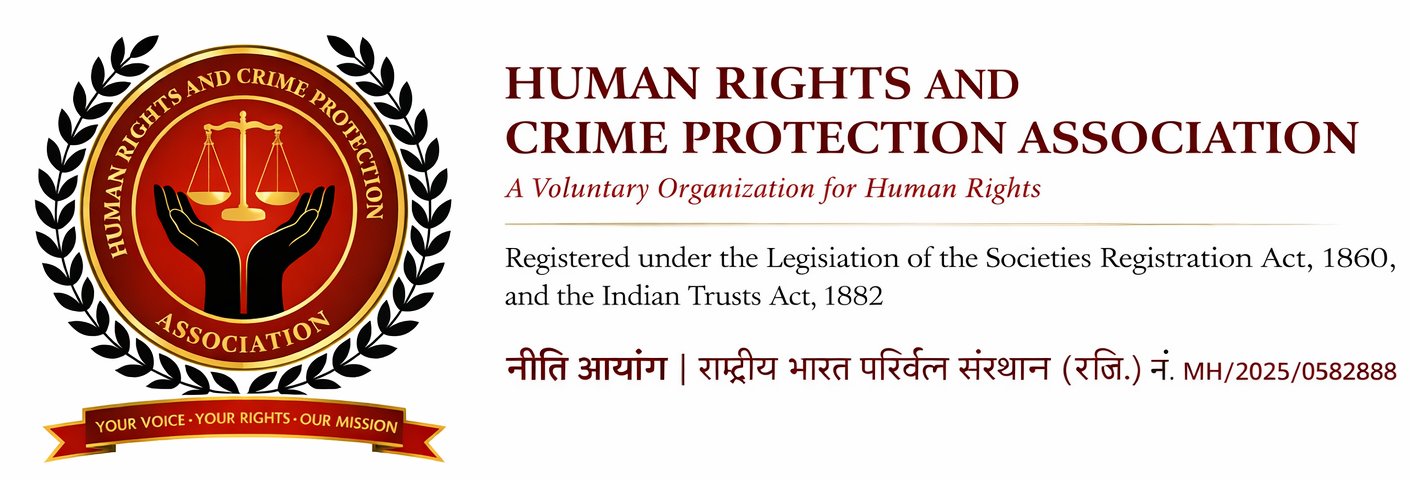
Human rights form the foundation of a just and equal society. In India, these rights are protected by the Constitution and supported by various laws and institutions. However, despite legal safeguards, challenges such as rising crime rates, lack of awareness, and social inequalities continue to impact individuals across the country. This is where organizations like the Human Rights & Crime Protection Association (HRCPA) play a crucial role in bridging the gap between law, awareness, and action.
Understanding Human Rights in India
Human rights are the basic rights and freedoms guaranteed to every individual, regardless of caste, gender, religion, or economic status. These include the right to equality, freedom of speech, protection from exploitation, and the right to life and liberty.
In India, human rights are safeguarded through:
- The Constitution of India
- The Protection of Human Rights Act, 1993
- Various legal frameworks addressing women and child safety, cybercrime, and social justice
Despite these provisions, human rights violations in India remain a pressing concern, especially in marginalized and underprivileged communities.
Major Challenges to Human Rights Protection
1. Lack of Legal Awareness
One of the biggest barriers to justice is the lack of awareness about legal rights. Many individuals are unaware of how to report crimes or seek help, which often leads to underreporting.
2. Rising Crime Rates
From cybercrime and financial fraud to domestic violence and harassment, the nature of crime is rapidly evolving. This makes crime prevention in India more complex and demanding.
3. Social Inequality and Discrimination
Issues like gender inequality, caste-based discrimination, and economic disparity continue to limit access to justice for many individuals.
4. Delayed Justice System
Legal procedures can often be lengthy and complicated, discouraging victims from pursuing justice.
Role of NGOs in Crime Prevention and Human Rights Protection
Non-Governmental Organizations (NGOs) have become essential in strengthening human rights protection and promoting community safety. The Human Rights & Crime Protection Association (HRCPA) is actively contributing to this mission through various initiatives.
1. Creating Legal Awareness
HRCPA conducts awareness campaigns, seminars, and workshops to educate individuals about their rights and legal remedies. By spreading knowledge, the organization empowers people to take action against injustice.
2. Supporting Victims of Crime
Victims of crimes often face emotional, social, and legal challenges. HRCPA provides guidance, counseling, and support to individuals affected by:
- Domestic violence
- Cybercrime
- Fraud and financial exploitation
- Child abuse
This support system ensures that victims are not alone in their fight for justice.
3. Promoting Women and Child Safety
Women and children are among the most vulnerable groups when it comes to human rights violations. HRCPA works towards:
- Raising awareness about safety laws
- Encouraging reporting of crimes
- Promoting gender equality and protection
4. Addressing Cybercrime Awareness
With the rise of digital platforms, cybercrime in India has increased significantly. HRCPA educates individuals about online safety, fraud prevention, and digital rights to help them stay protected in the digital world.
5. Encouraging Community Participation
Community involvement is key to reducing crime and ensuring safety. HRCPA encourages citizens to actively participate in awareness drives, report violations, and support local initiatives for better law enforcement.
Why Human Rights Awareness is Important Today
In today’s fast-changing world, awareness is the first step toward protection. When individuals understand their rights, they are more likely to:
- Speak against injustice
- Report crimes without fear
- Support others in need
- Contribute to a safer society
Organizations like HRCPA play a vital role in making this awareness accessible to all sections of society.
Building a Safer Future Together
The protection of human rights is not just the responsibility of the government or NGOs—it is a collective effort. By working together, individuals, organizations, and authorities can create a society where justice is accessible and rights are respected.
The Human Rights & Crime Protection Association continues to lead this mission by promoting awareness, supporting victims, and strengthening community safety across India.
Conclusion
Human rights are essential for maintaining dignity, equality, and justice in society. While India has strong legal frameworks, challenges still persist in ensuring their effective implementation. NGOs like HRCPA are playing a transformative role in addressing these gaps through awareness, support, and proactive initiatives.
By staying informed and actively participating in society, we can all contribute to building a safer, more just, and empowered India.